Down the ditch, nitrogen and phosphorus part ways
Farm drainage ditches are often treated as simple pipes from field to stream. Sampling four of them from the field edge to the outlet, our group found that organic nitrogen, phosphate, and nitrate each followed their own path.
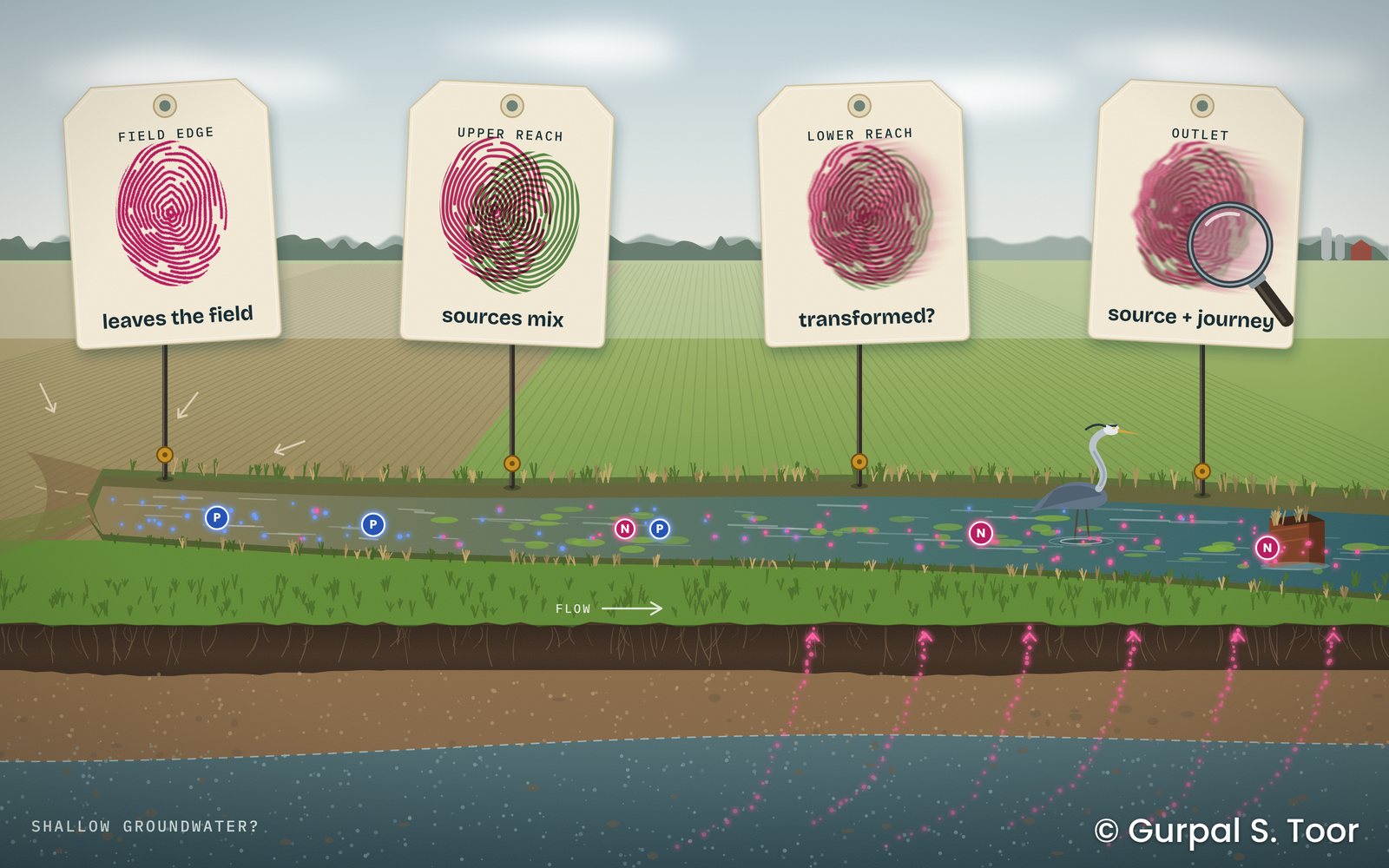
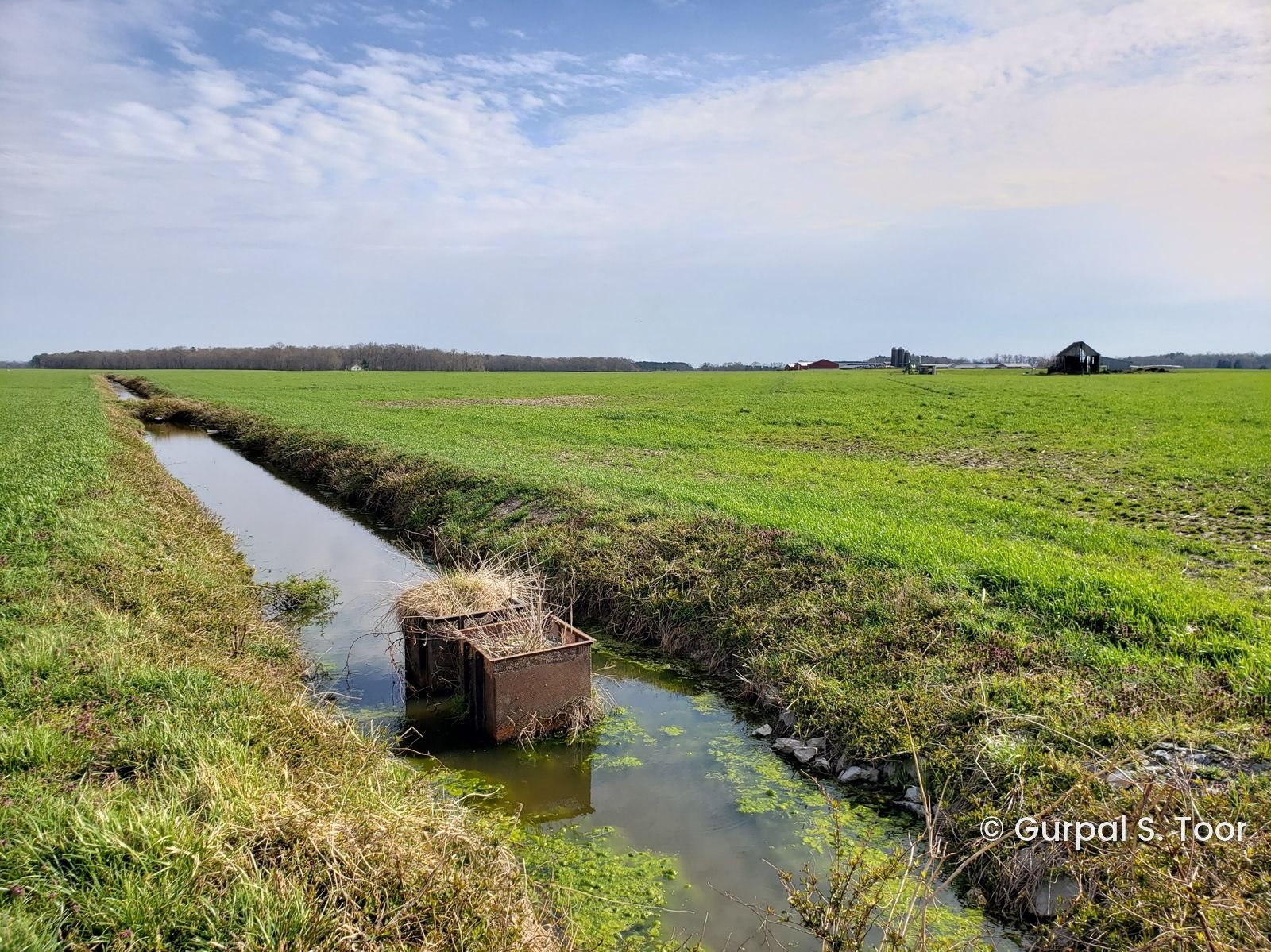
Surface drainage ditches make flat, poorly drained farmland workable, and they run through coastal plains and river lowlands in many parts of the world. They are also where water from fields first gathers on its way to streams and bays. In this study, led by Shuiwang Duan with Fajun Sun, our group sampled four ditches on Maryland’s Eastern Shore three times in spring 2022, from the field edge to the outlet, measuring dissolved organic carbon and the main forms of nitrogen and phosphorus.
Dissolved organic nitrogen and phosphate generally declined along several of the monitored flow paths. In two ditches, the largest drop came between the field edge, where runoff entered, and the first sampling point downstream. Declines showed up in both vegetated and unvegetated ditches, so vegetation alone did not explain them. Because flow was not measured at each location, these are changes in concentration, not loads.
Nitrate behaved differently. On one sampling date, nitrate in one ditch rose 6.8-fold from the field edge to the outlet, from 0.46 to 3.12 milligrams per liter. Shallow groundwater entering the lower reach is one possible explanation, and it remains a hypothesis to test.
Nitrate isotopes added a twist. In the upper reach, the isotope patterns fit a mix of changing sources. In the lower reach, they fit possible transformation within the ditch. A nitrate “fingerprint” measured downstream can therefore reflect both where the nitrate came from and what happened on the way, which makes tracing sources from isotopes alone harder than it looks.
The ditches also differed sharply in their balance of nitrogen and phosphorus. At the outlets, the molar ratio of total nitrogen to total phosphorus averaged about 1.3 to 1.6 in the two ditches draining fields that received poultry litter that spring, and about 32 to 88 in the other two, in the same region and season. Field inputs, connections to groundwater, and processing within the ditch may all shape what reaches downstream waters.