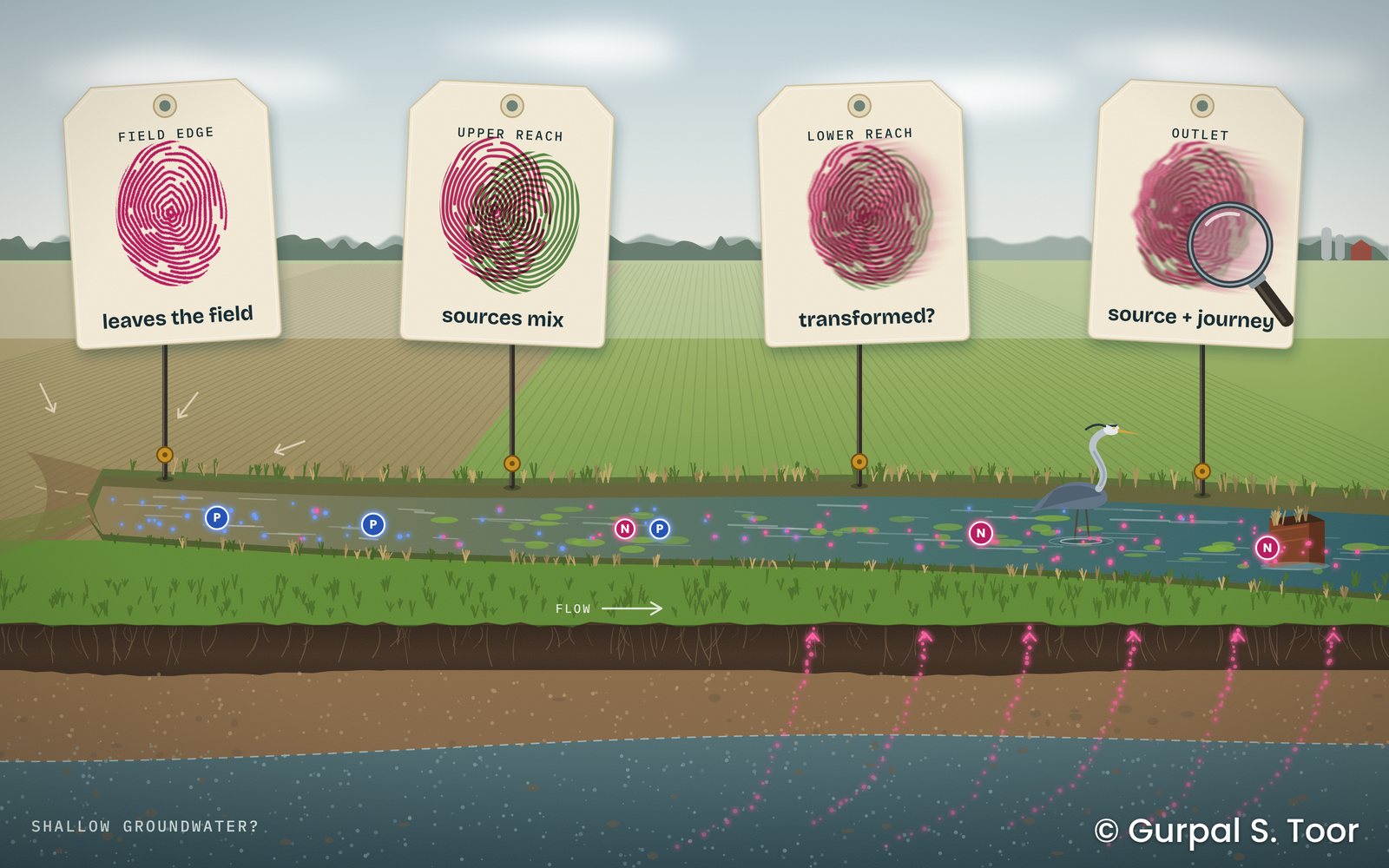
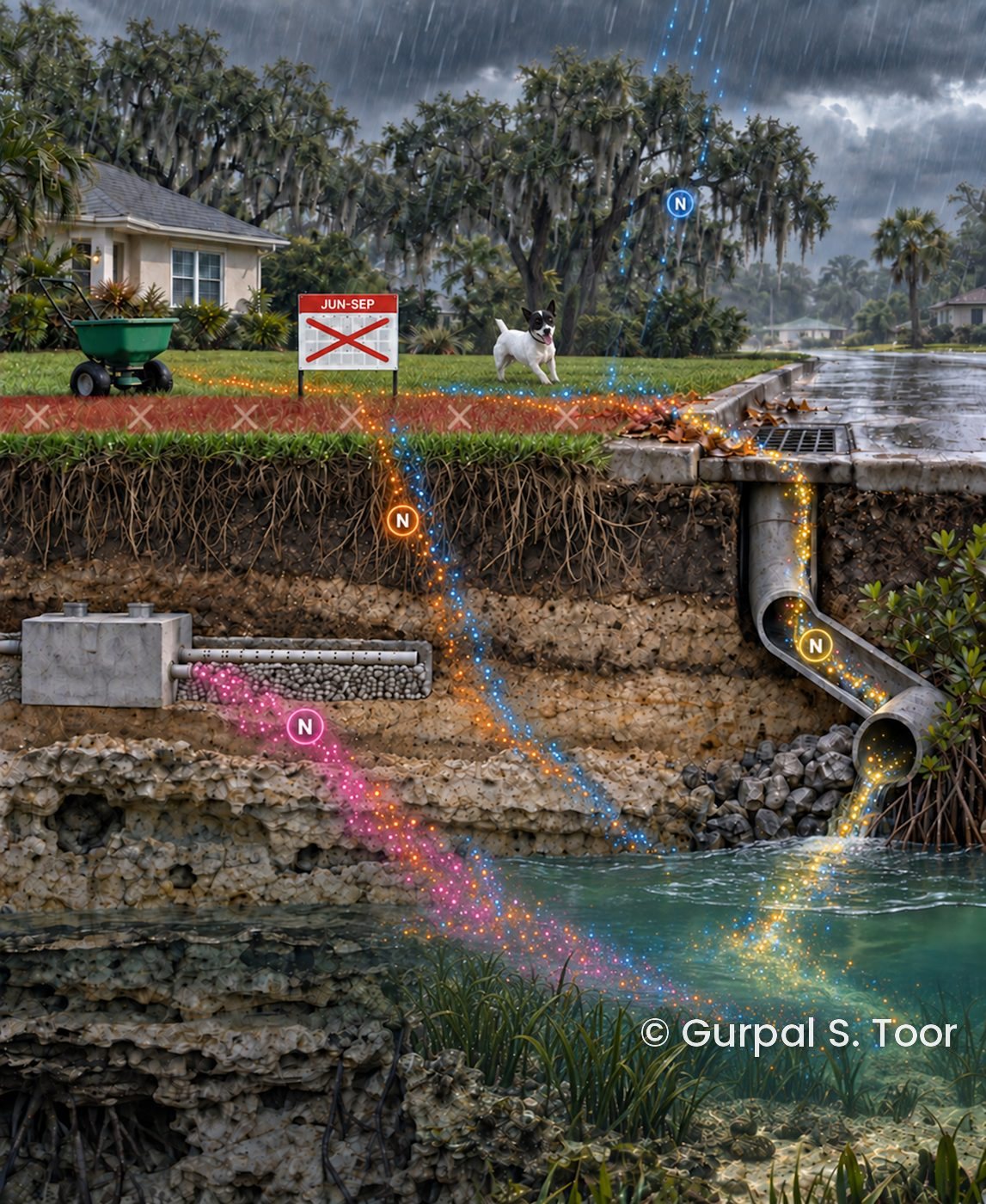
Urban nitrogen policy should follow pathways, not the calendar
Seasonal fertilizer blackouts are an imperfect proxy for nitrogen export. This ES&T Viewpoint argues that policy should target sources, forms, storage pools, and hydrologic pathways.
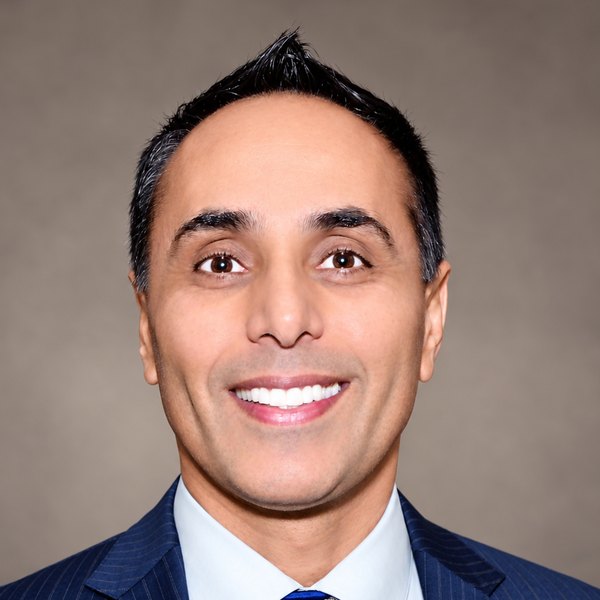
Gurpal S. Toor is a Professor and Extension Specialist in Nutrient Management and Water Quality at the University of Maryland, College Park, USA. His research examines nitrogen and phosphorus sources, transformations, and transport in agricultural and urban landscapes, combining field monitoring, isotope tracing, and biogeochemical analyses to identify nutrient pathways and evaluate practices that protect water quality. His Extension program translates research into guidance for land managers, communities, farmers, and policymakers.
His work on residential runoff, stormwater systems, and onsite wastewater links environmental processes with practical nutrient management. He contributes to Maryland initiatives that address nutrient losses and protect water quality in the Chesapeake Bay watershed. He earned his Ph.D. in environmental soil science from Lincoln University, New Zealand, and held faculty appointments at the University of Florida before joining Maryland. He has also served on the Board of Directors and Science Policy Committee of the American Society of Agronomy and the Soil Science Society of America.
Nitrogen · Phosphorus · Water
Our group studies how nitrogen and phosphorus move from the farms and cities where they are applied, through soils and shallow groundwater, into streams, bays, and lakes. The question that organizes the work is residence time: what a landscape stores, what it releases, and on what schedule.
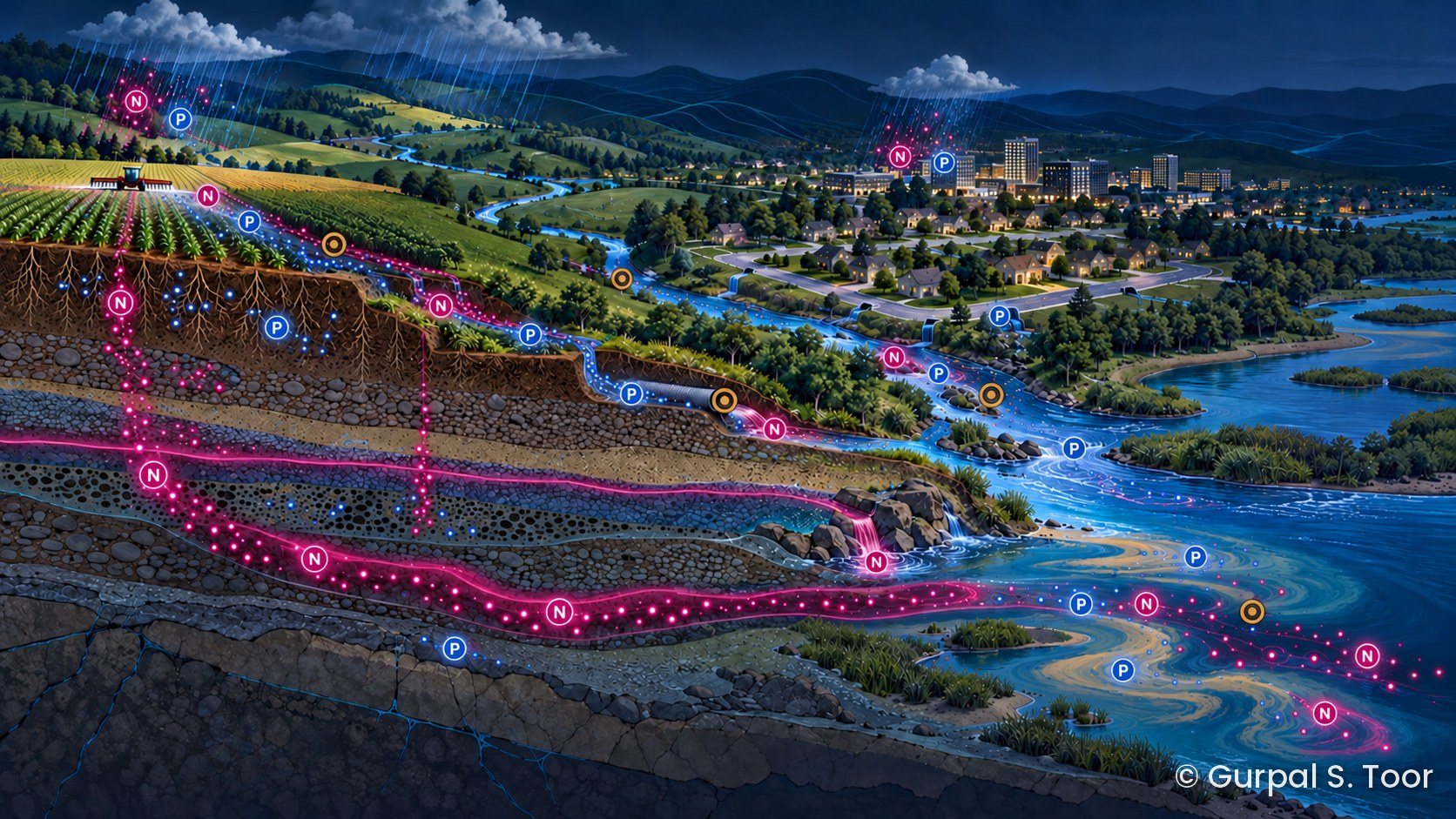
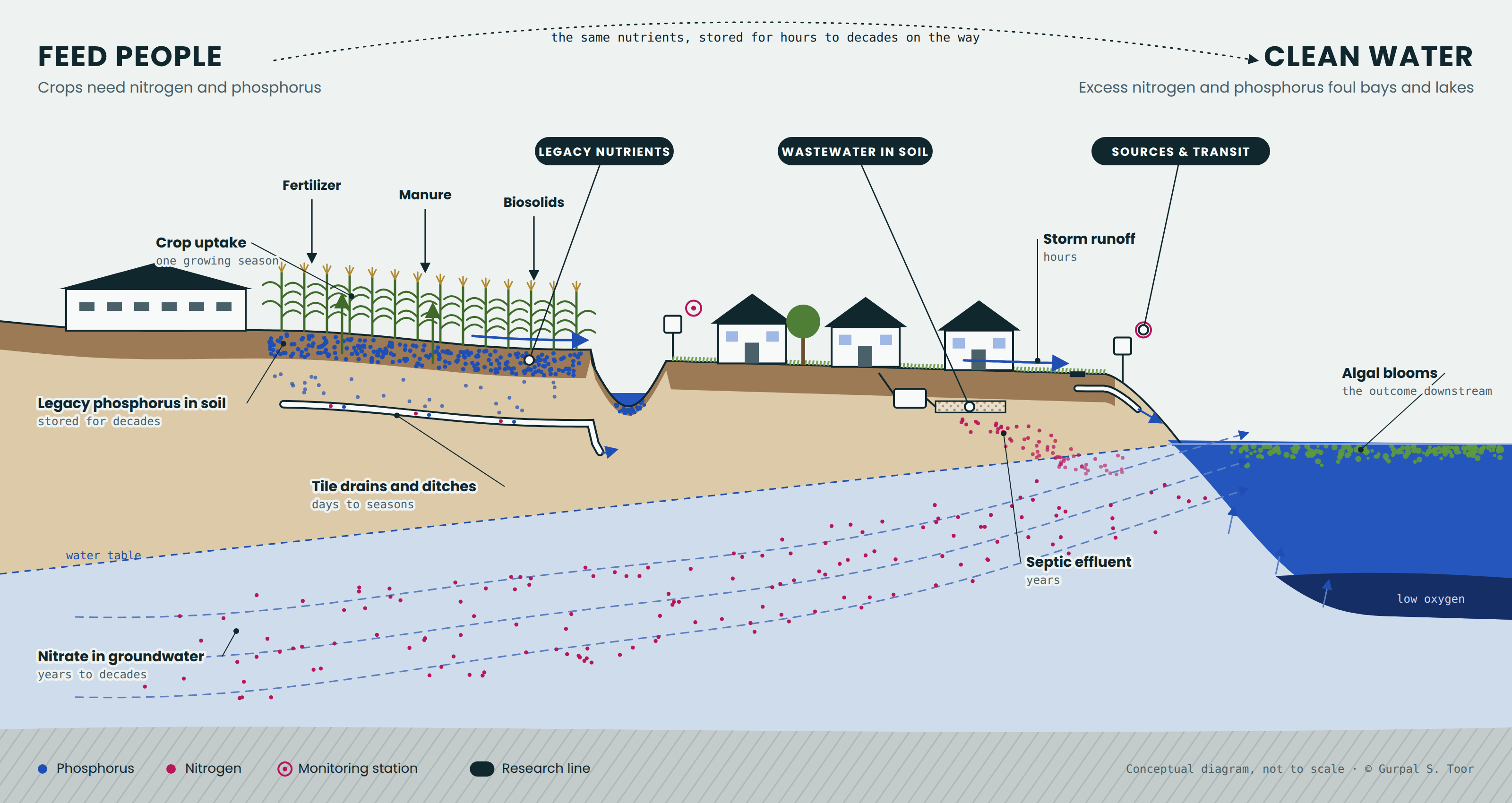
Nitrogen and phosphorus leave farms and towns by surface runoff, tile drains, and groundwater, and reach the water in hours to decades. Illustration.
The program
Crops need nitrogen and phosphorus. Bays and lakes need far less of them. Most of what we apply to land is held in soils, ditches, and groundwater for hours to decades before it reaches water. Our group measures those stores and pathways, and turns the results into tools farmers and regulators use.
In the field
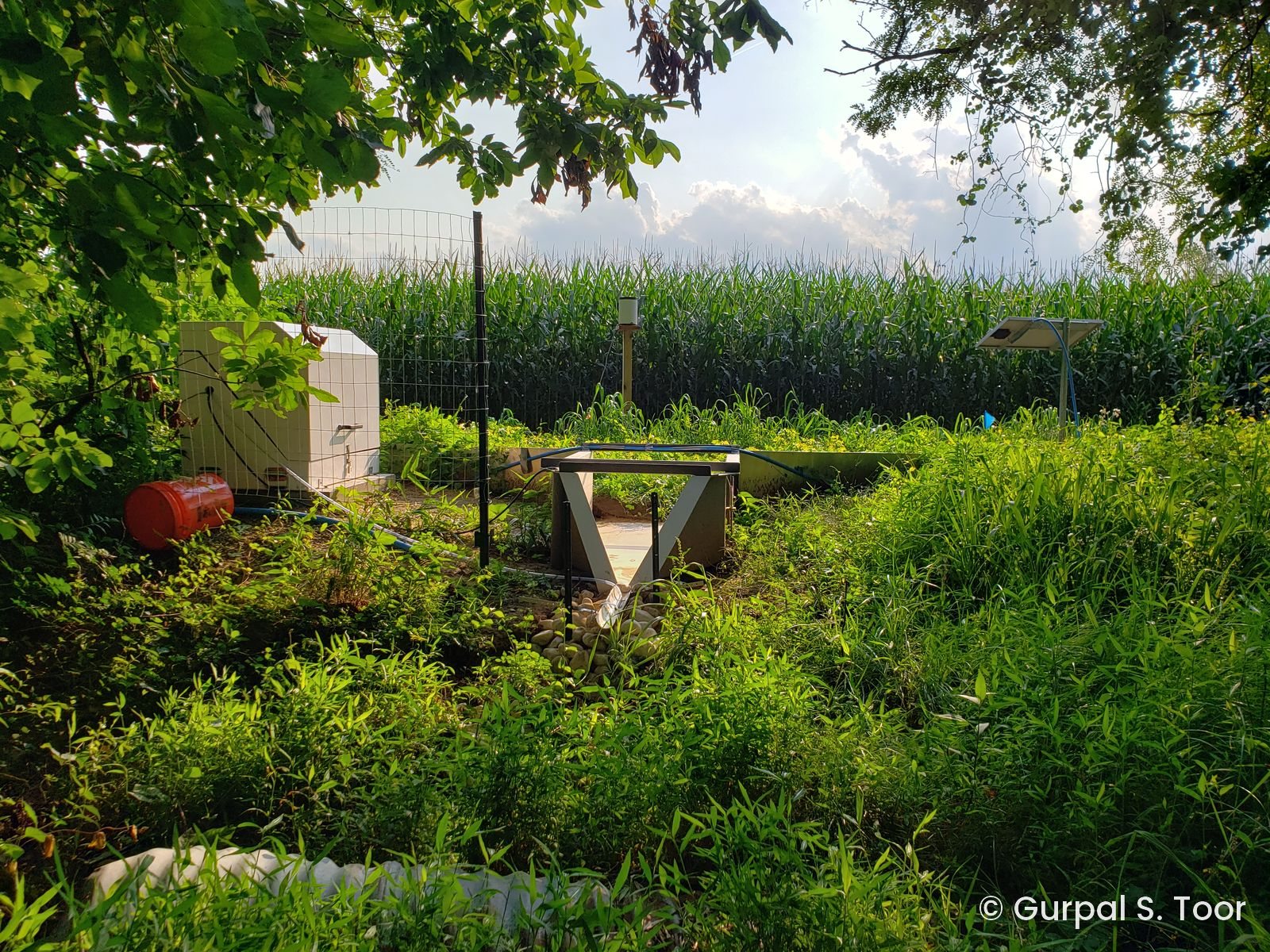
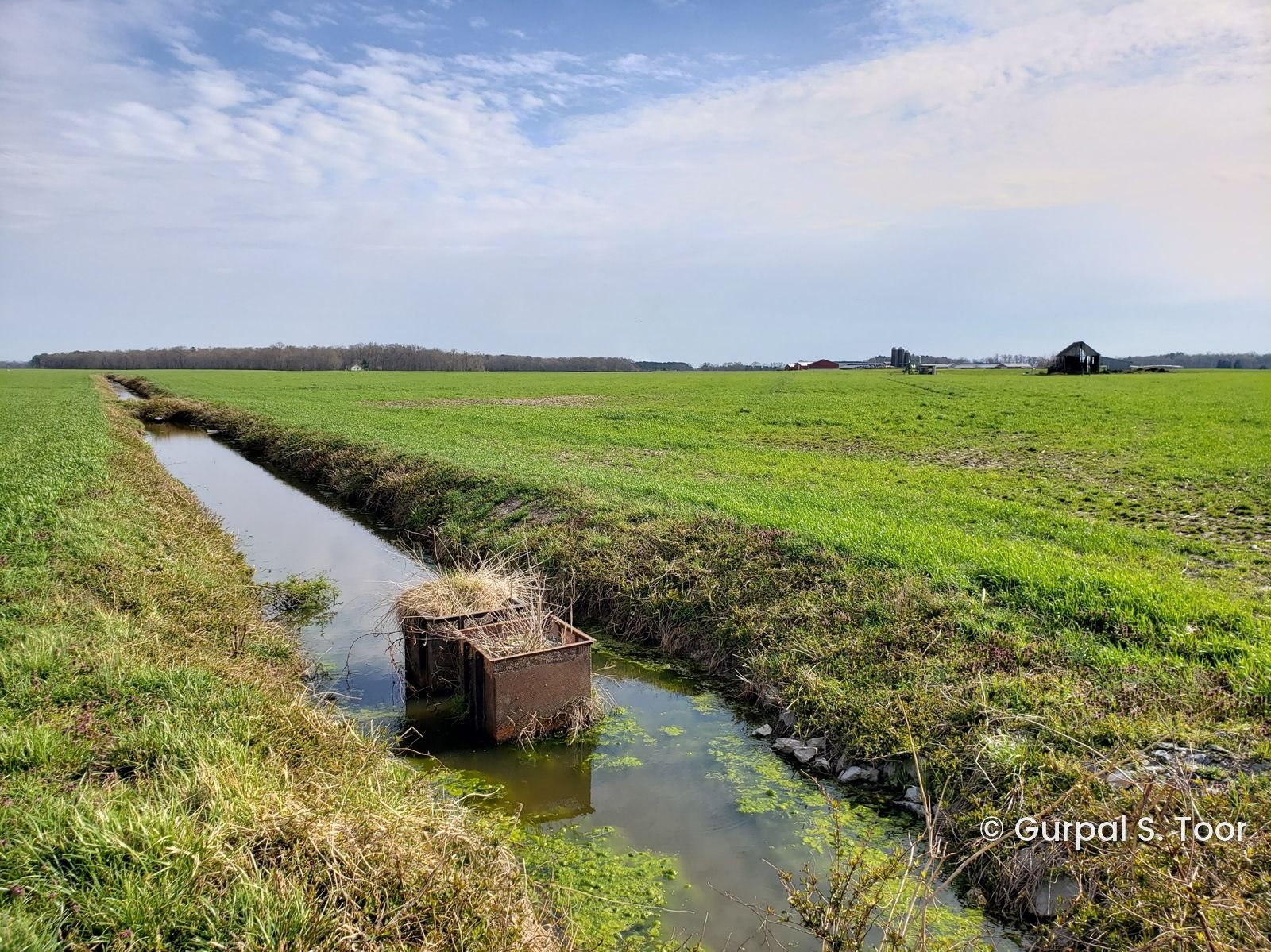
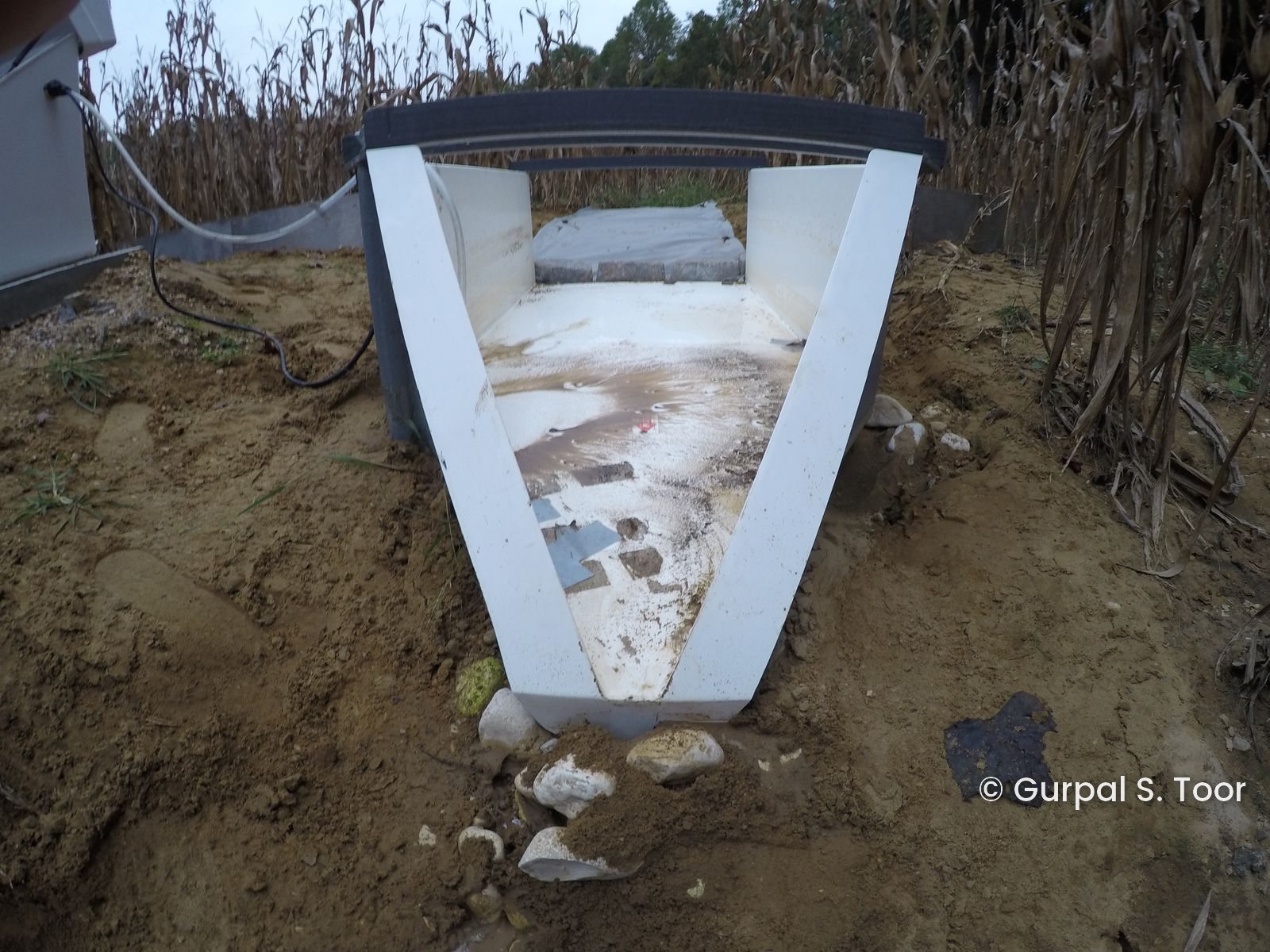
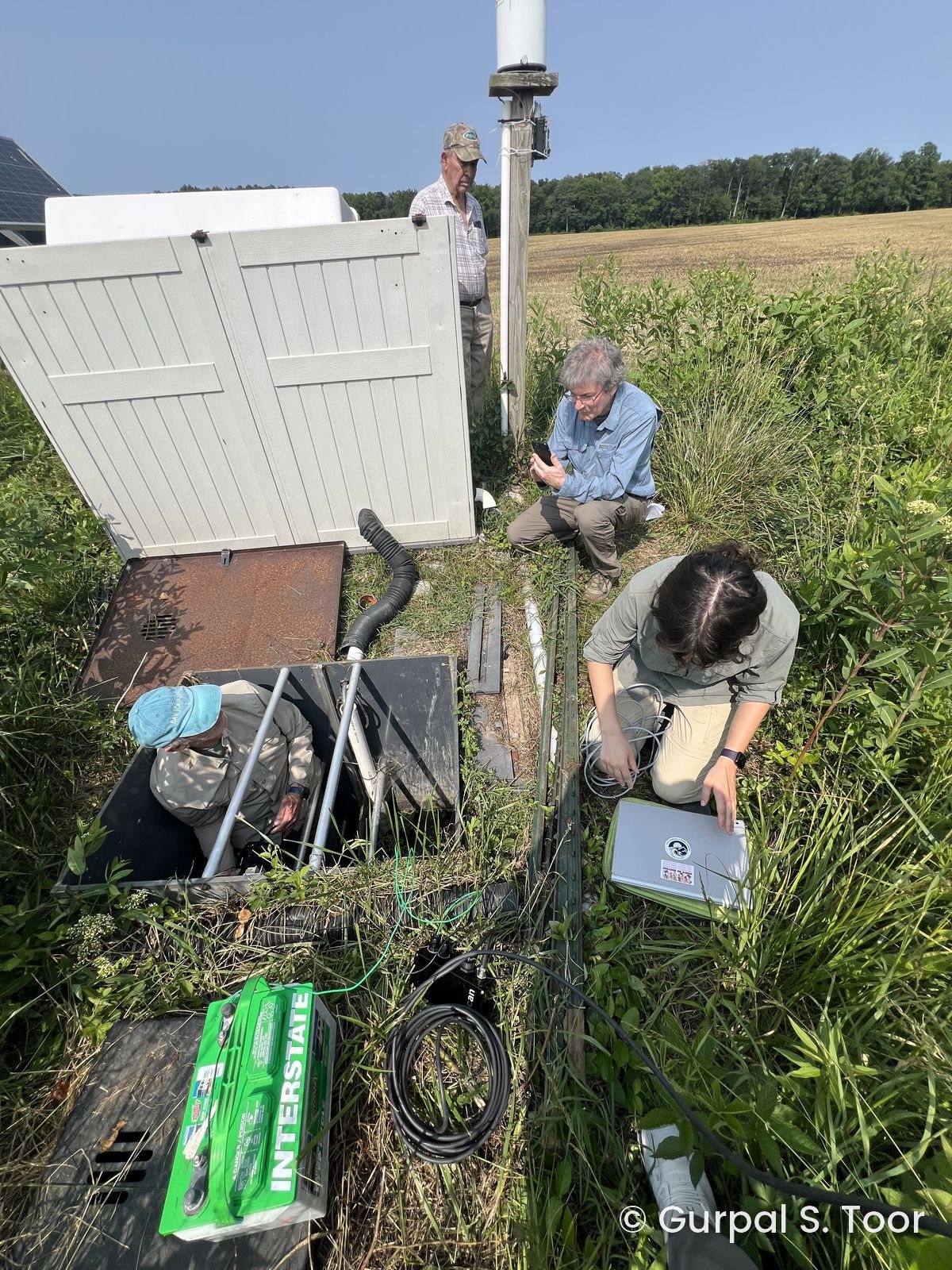
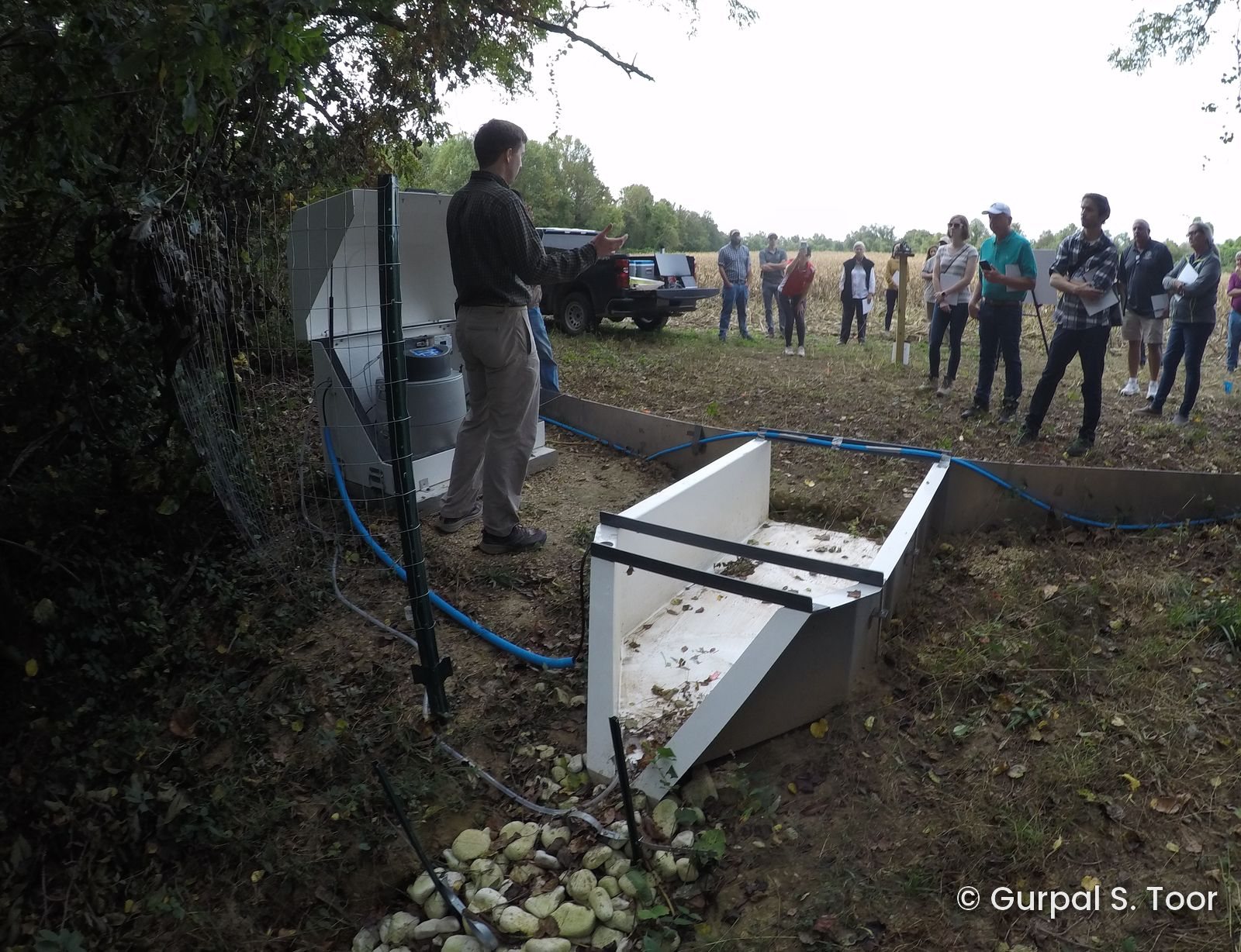
From farms to the Chesapeake Bay. Stations at the outlets of small agricultural catchments measure flow and collect water every time it rains, across the three pathways water takes to leave agricultural farms: overland flow, tile drains, and open ditches.
15 small agricultural catchments, 5 to 140 acres7,400+ runoff and drainage samples in three years3 flow paths: overland, tile, ditch
Research
Nitrogen and phosphorus can take years to decades to travel from farm fields to streams and bays. Held in soils, sediments, and groundwater and routed along slow, winding flow paths, they keep arriving long after practices change, which is why even well-run conservation programs can wait decades for cleaner water. Each line of our work follows one part of that journey.
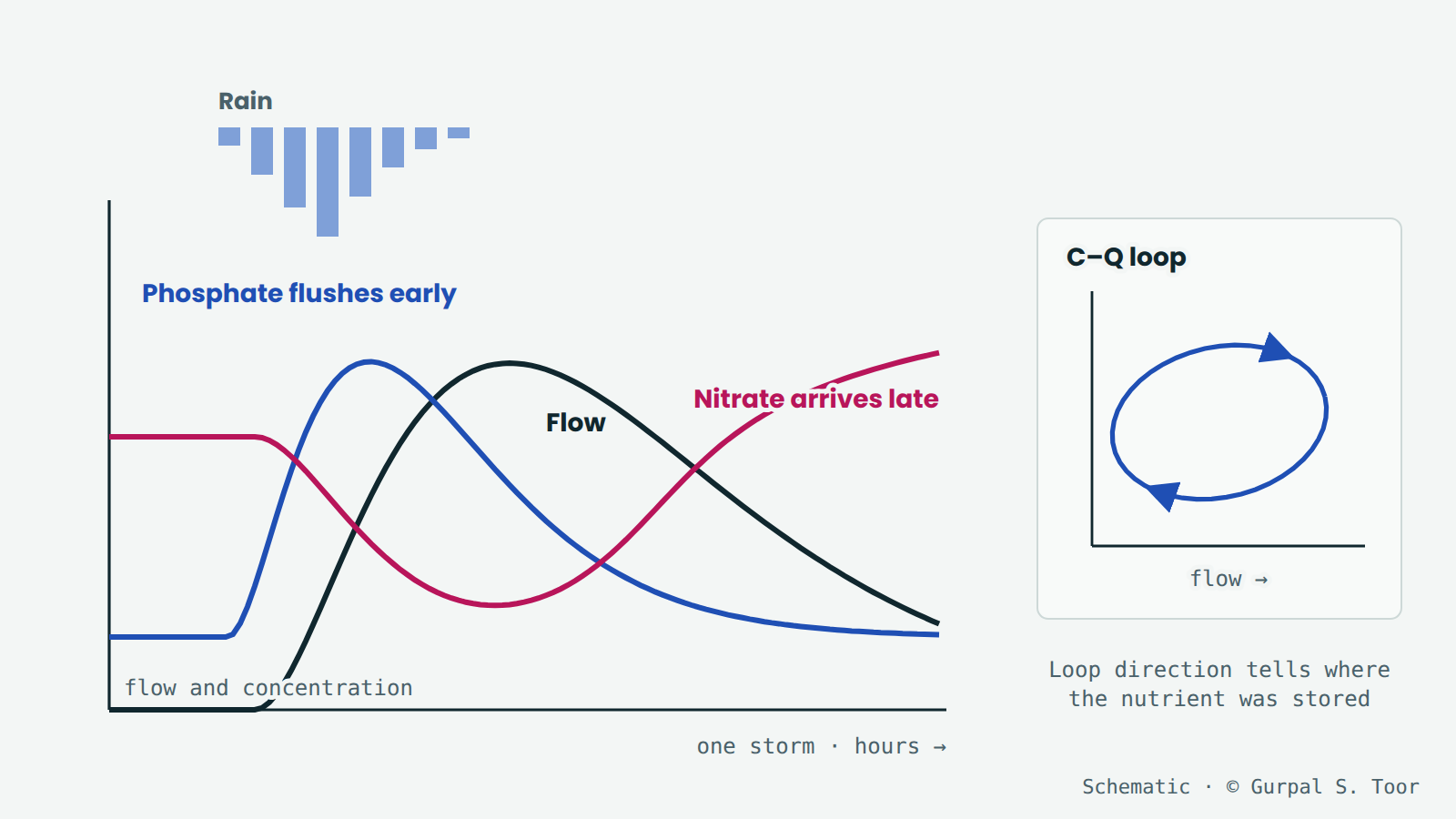
Decades of surplus fertilizer and manure sit in soils, ditch sediments, and groundwater. Our group measures how that legacy is released, storm by storm, in small agricultural catchments and drainage networks, and identifies the forms it is held in, from dissolved organic molecules to soil minerals.
Event-scale sensors · C–Q hysteresis · molecules to minerals: FT‑ICR‑MS, ³¹P NMR, P K‑edge XANES
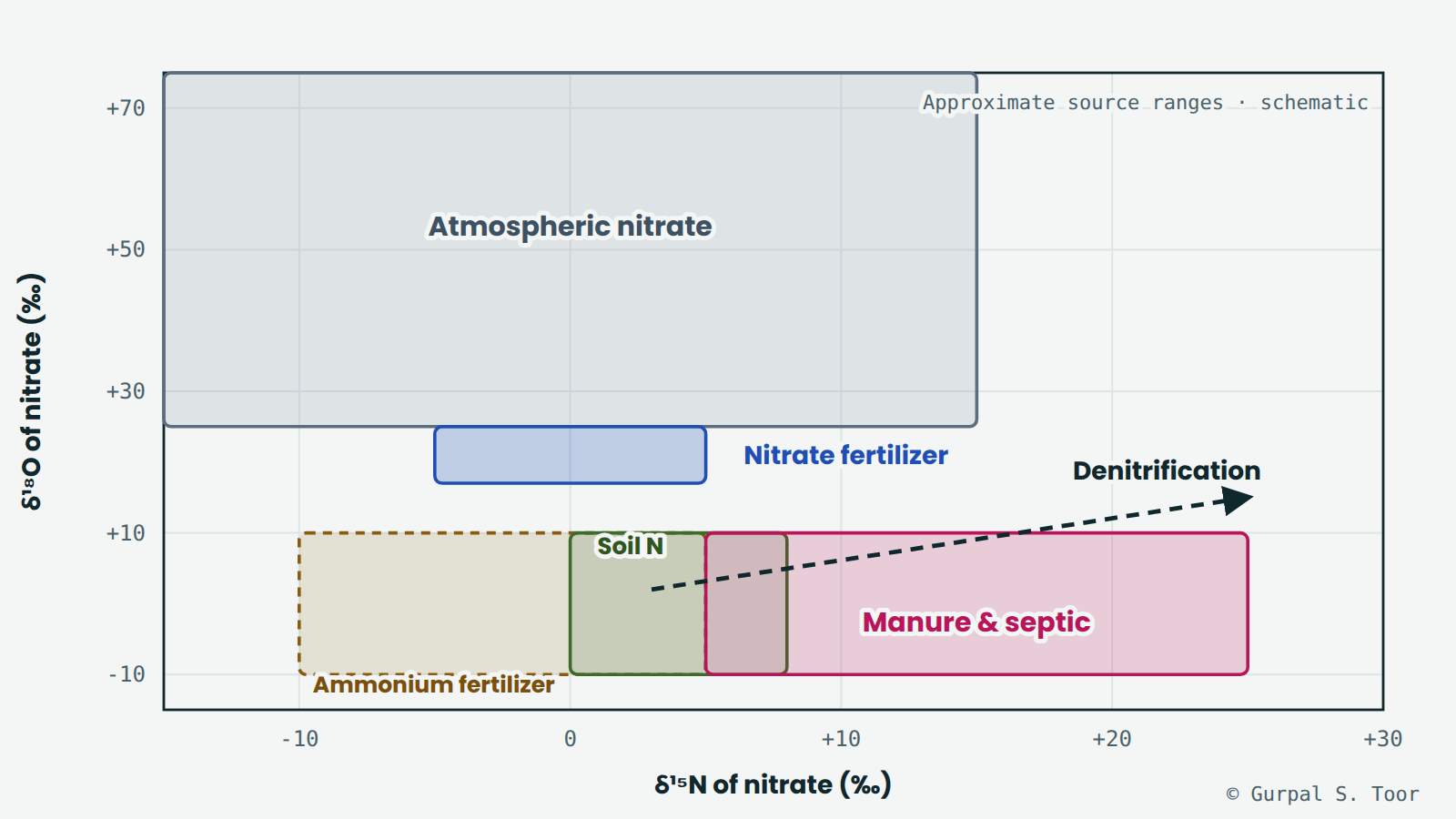
Nitrate and water isotopes separate fertilizer, manure, and septic sources from what happens in transit. New work follows dissolved organic nitrogen, the form that nitrate measurements miss, from its molecular makeup to its fate in cropping systems.
δ¹⁵N, δ¹⁸O of nitrate · δ²H, δ¹⁷O, δ¹⁸O of water · molecular DON
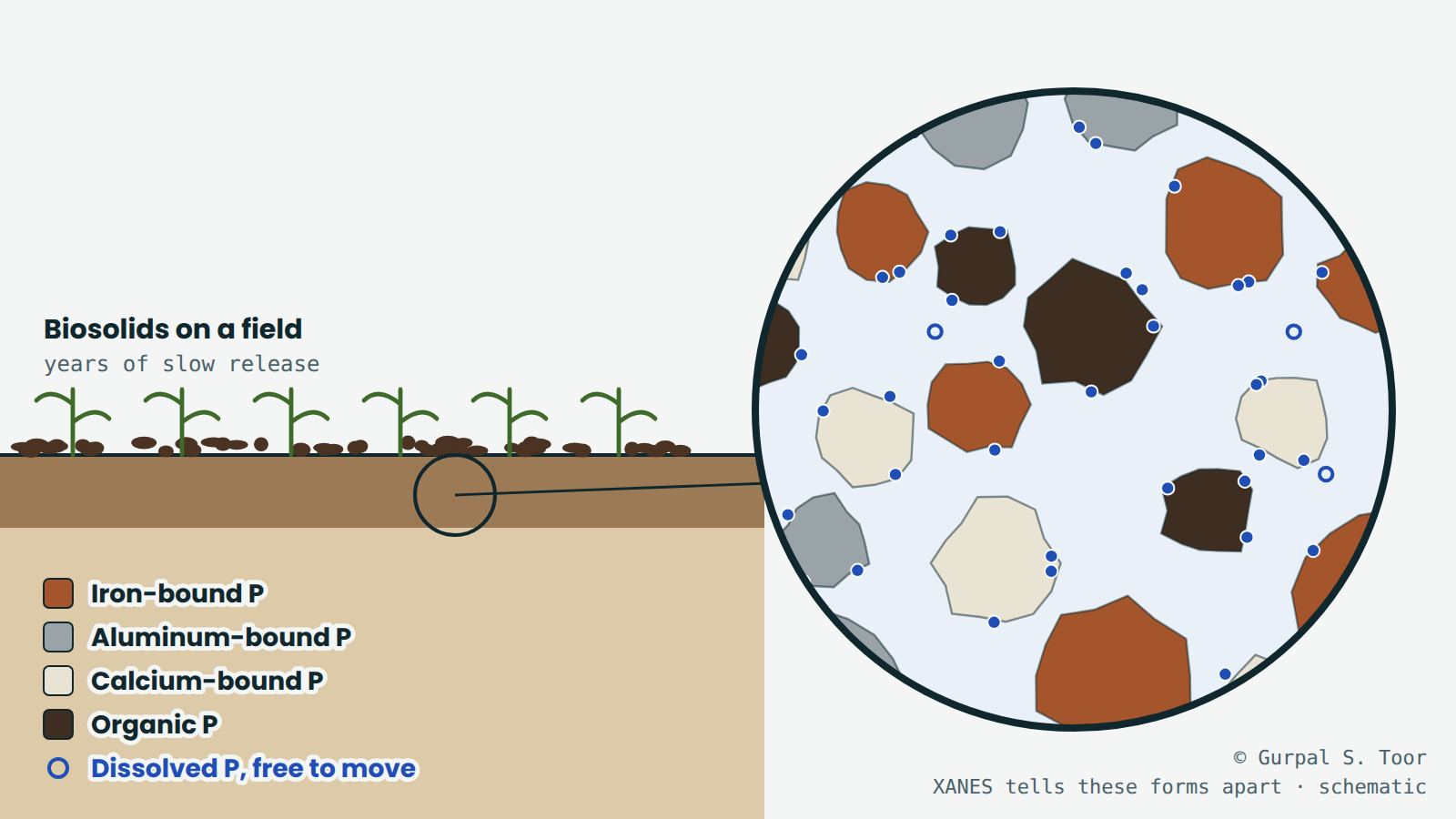
Biosolids and septic drainfields deliver nitrogen and phosphorus to soils that hold and release them over years. Current work resolves the phosphorus forms in biosolids-amended soils.
Biosolids P pools · septic drainfields · synchrotron XANES
News & field notes
Seasonal fertilizer blackouts are an imperfect proxy for nitrogen export. This ES&T Viewpoint argues that policy should target sources, forms, storage pools, and hydrologic pathways.
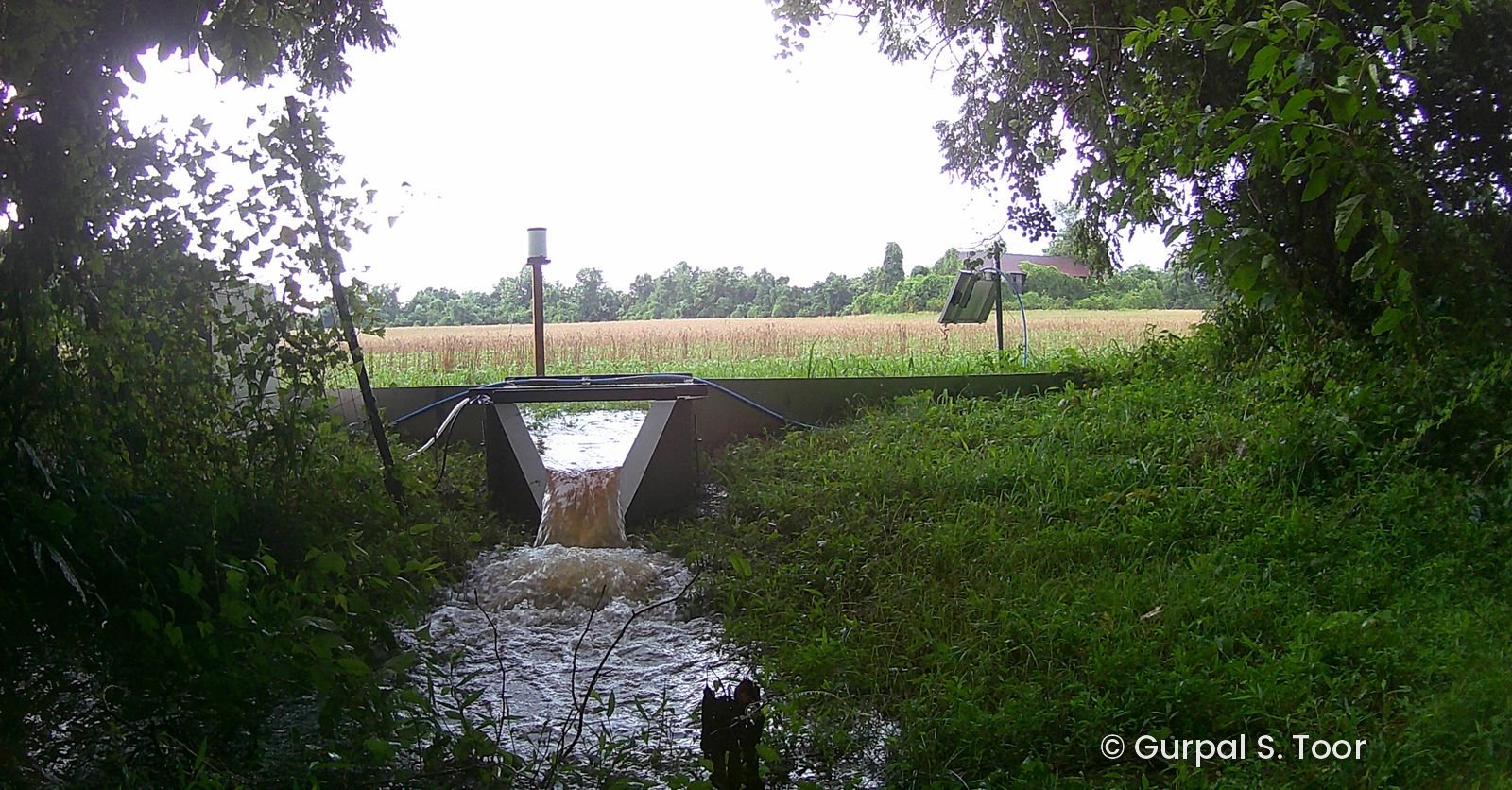
A trail camera at the outlet of one of our small agricultural catchments catches runoff starting to pour through the flume as a storm arrives.
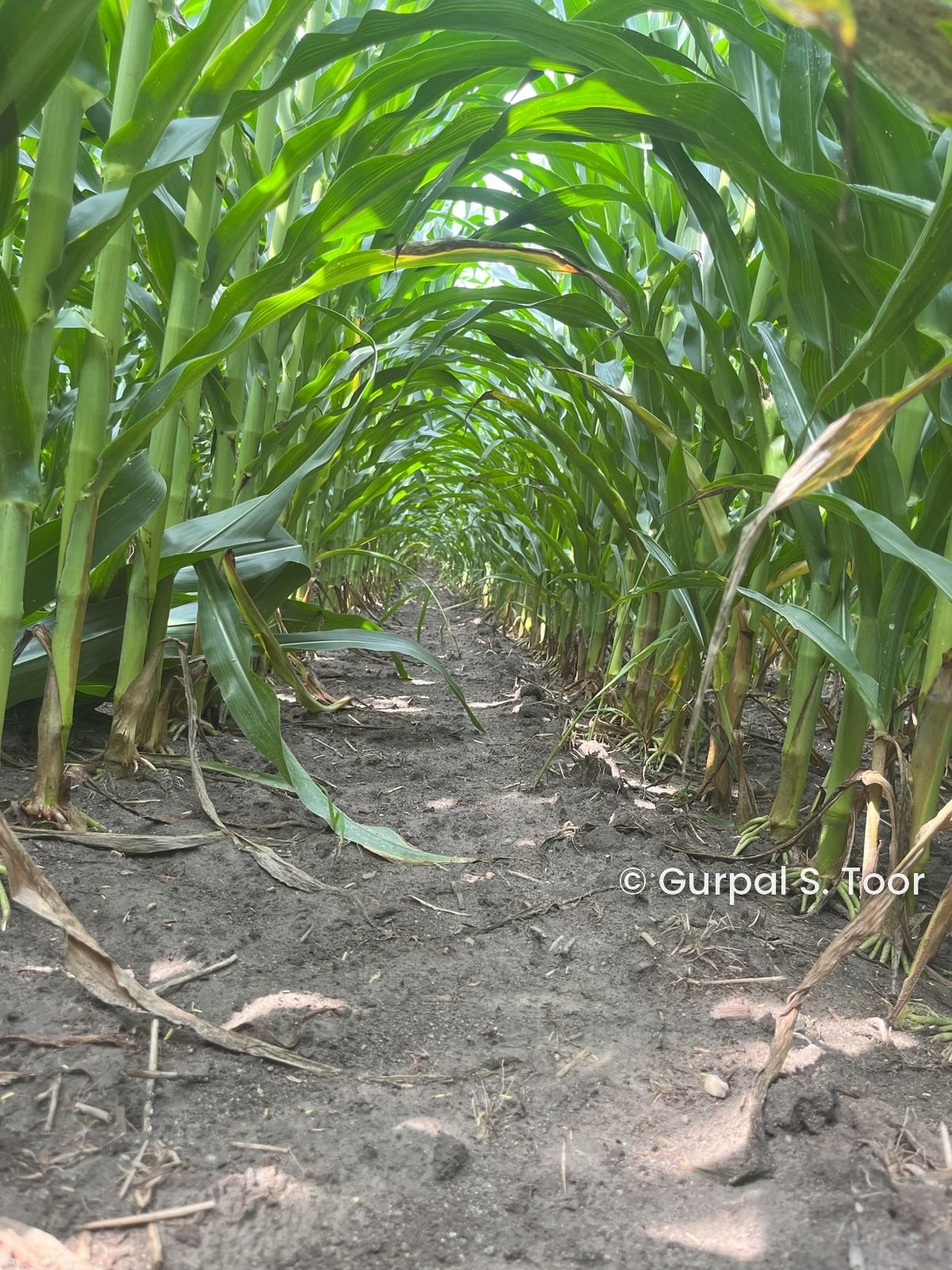
Our new comprehensive review of how nitrogen moves from farmland to water: the pathways, the drivers, and what they mean for management. Advances in Agronomy 198.
Publications
A steady record from 2015 to today, including long-running collaborations in China, Croatia, and Chile. Every paper, with citations, is on Google Scholar.
Google Scholar, October 2026
29 papers · hover near the top or bottom, use the arrows, or scroll inside the list
Teaching & mentoring
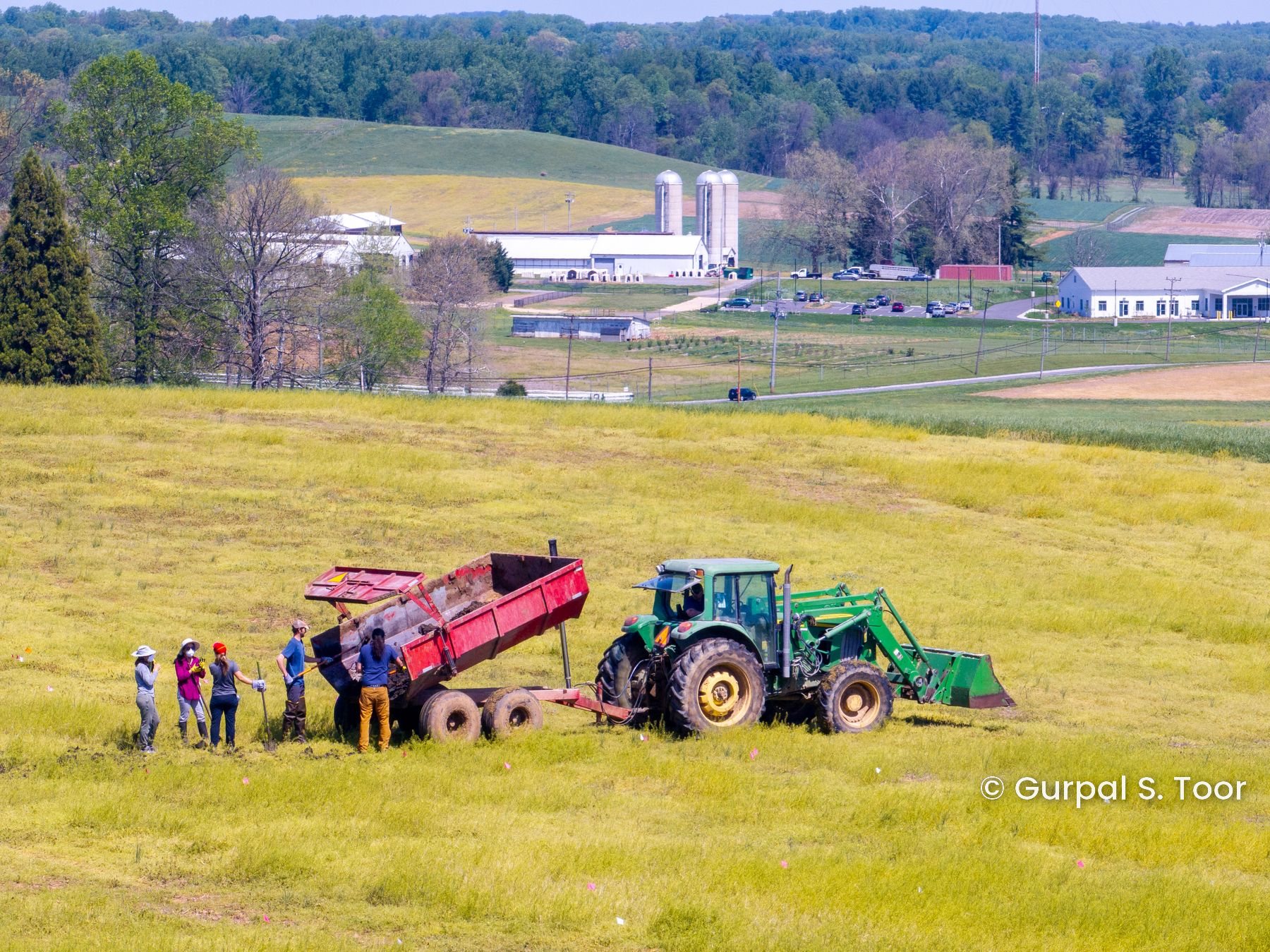
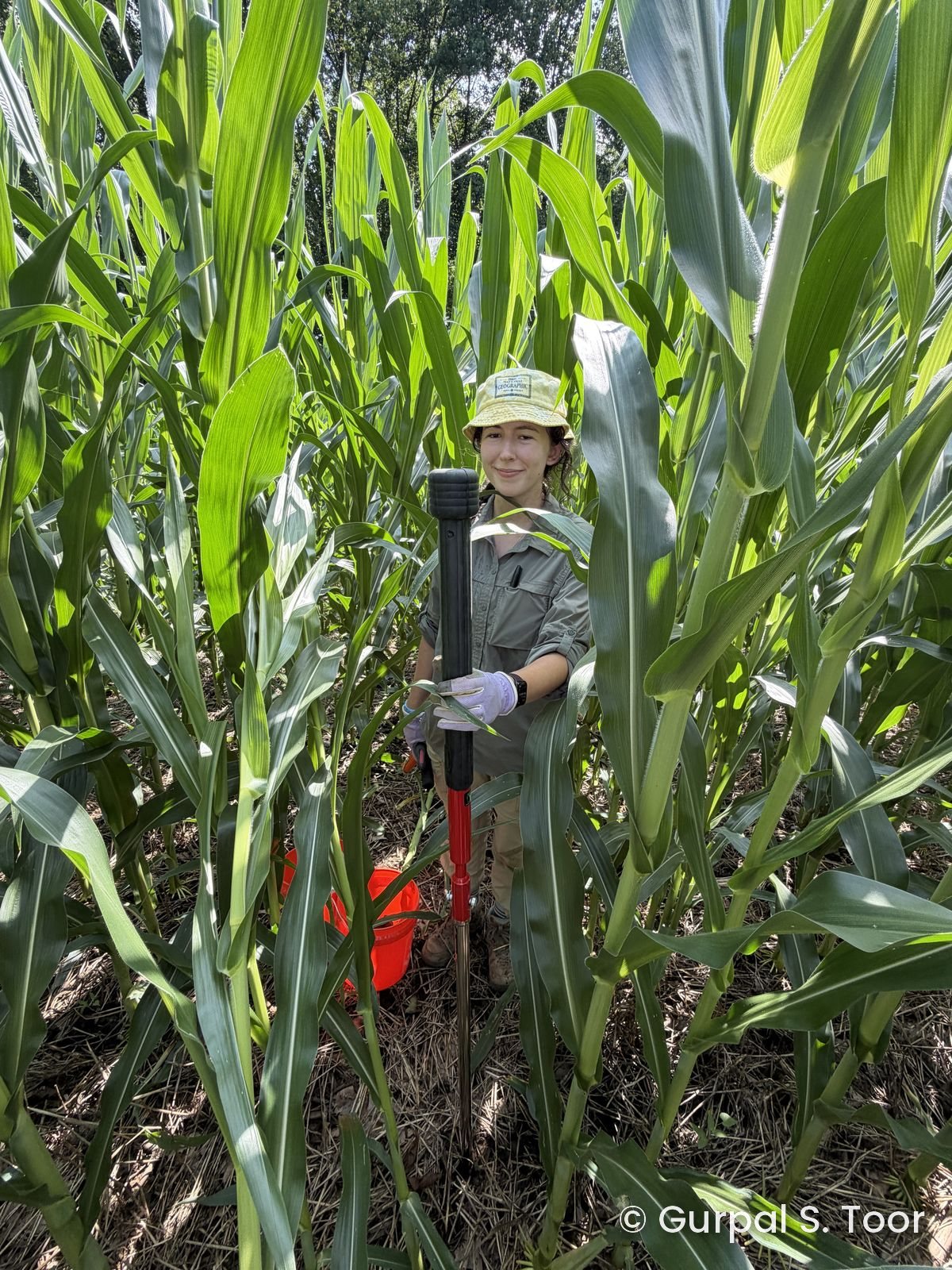
Most of my teaching happens one-on-one, in the lab and the field, and in the certification courses where consultants and farmers learn the rules they will work under.
People
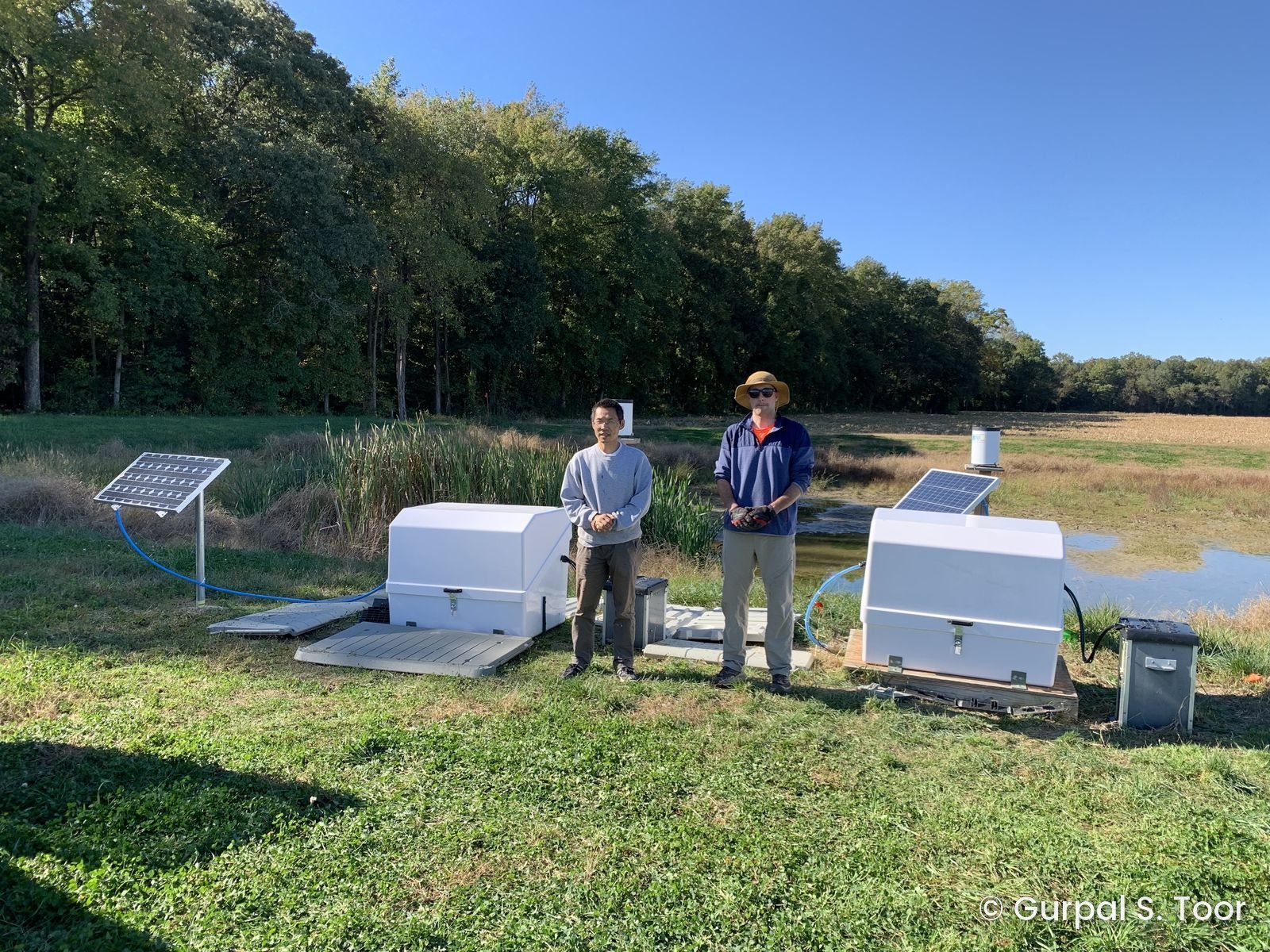
Former students, postdocs, and professional track faculty now work in universities, research centers, government agencies, and water utilities on three continents.
Extension & tools
Maryland New Extension bulletin · September 2026
Toor & Dorsey · University of Maryland Extension EB-2026-0828
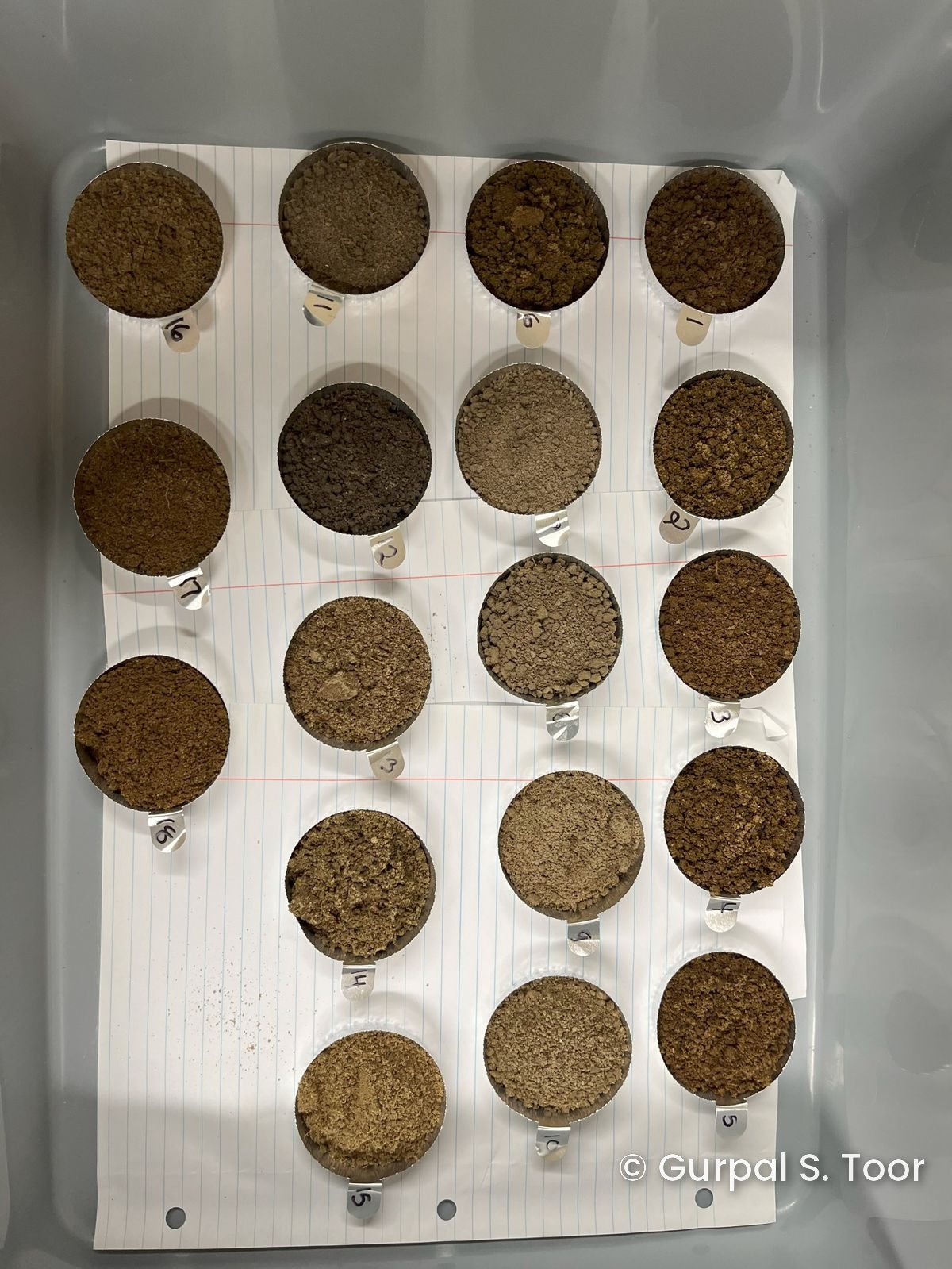
We tested COMET-Farm, a widely used carbon decision tool, against measured soil organic carbon on 15 Maryland fields. Its default estimates missed by 18.8 tonnes of carbon per hectare on average; field-specific inputs cut the miss to 7.9, and both pointed the same way on carbon change in 13 of 15 fields. The advice: use the tool to compare management scenarios, not as a measurement of what is in the soil, and pair it with sampling, especially on poorly drained or manured fields.
Average miss against measured soil carbon, t C/ha
Around the world
Collaborations, appointments, and lectures in ten countries, with the most active partnerships in China, Chile, and Croatia.
Recognition & service
Supported by
Agencies, utilities, and grower organizations that have funded the work in Maryland and Florida.
Stay in touch
Follow by email to hear when a new paper, video, or field story goes up. Or write to me about research, collaborations, talks, or media.